Sunday, May 24, 2009

The best dance I have ever been to...


Above: Candida (the lady I stayed with while in El Rucio, who also got up at 3am to listen to the radio... but I think she made up for it by giving me fresh cheese and sugar cane candy to eat!!)

All I could think about was being able to close my eyes and sleep, even if it was in a hammock, but the conversation with Don Natividad, my 70 year old, tree-climbing, fence hopping host, was so interesting. He was telling me about times during the war and how him and his family were affected. It was only 6:30 at night and we had only begun the after dinner conversation, but I was completely exhausted. I had been up since 3:30am, went to bed at midnight the night before, helped with an organic fertilizer workshop during the day, hiked to the river and swam with the kids in the afternoon after the workshop, chased pigs, and more all in one day…hence, I thought sleep was a well deserved end to the day.

         Above is Don Natividad in the process of climbing a tree and hoping the fence!


   I was in El Rucio, a community in Morazán, the poorest and most isolated zone in the country, which also happens to be the zone most affected by the war. Plus, El Rucio is one of the poorest and remote communities that we work with.  It’s probable that every family in the community lives on less than $1 per day and during the rainy season you have to walk 3 hours and cross the river on a cable (there’s a little seat and the person on the other side of the river hauls you across) to get in or out of the community. This was my first visit to this beautiful community, and I was thoroughly in love (and exhausted!). Despite the poverty, we were treated like royalty. We ate fresh cheese every day made from the cows in the community, ate the beans and corn the people grew, and

 chewed on sugar cane in the hot afternoons to renew our energy. Plus the landscape was continually inspiring as tall mountains and big rivers that I was dying to explore surrounded us!

            I had been invited to the community to help with a workshop on organic fertilizer and get to know the community, surveying the possibilities of repeating the community garden experience we were attempting in Los Naranjos there in El Rucio. The workshop had gone well and people from four neighboring communities had walked long distances to attend as well. It was exciting to see the people getting excited, asking questions and curious about this new technology (which is actually not new and probably something their parents were very familiar with). However, I also realized we were starting on a long slow road. The community is not highly organized, and the people have absolutely no experience in growing any type of vegetables. And, not surprisingly, malnutrition is an obvious problem in the community.  I was convinced of the need of a community garden, and hopeful that it could work, but I still needed to feel out the interest level in the people.

            But going back to where I started, the night after the workshop, I was exhausted and around 7:30 our conversation was winding down and we were getting ready for bed (but you should know that 7:30pm is actually past the normal bedtime in the community – they go to bed around 7pm and get up around 4am!) when Don Natividad asked us if we weren’t going to the dance. We (my 2 friends helping with the workshop and I) exchanged shocked looks and I slowly ventured to ask, “What dance?” He explained that several people had been talking about hosting a dance for us tonight. We all looked around, thankful for the people’s kindness, but hoping that Don Natividad was wrong or the people had decided against it as we were so close to finally resting in our hammocks. However, 15 minutes later, when we were almost in our hammocks, twenty people showed up at the house asking why we weren’t at the dance!

Obviously, we had to go to this dance that was hosted in our honor! So we taped on our smiles, wished for some Red Bulls and espressos, grabbed the flashlights, and headed out on the 15 minute walk to the house where the dance would be, following the music.

            While walking, I couldn’t help but be humbled and amazed by the stars. It was completely clear and there wasn’t electricity for at least an hour’s drive so the stars were spectacular. As we got closer and the music louder, I started waking up a bit more. It hit me just how cool it was that we were listening to music out there – just a few months ago another non-profit had helped the families install small solar panels on the roofs of the houses, giving them the first bit of electricity they had ever had.  Thus, I was going to a solar powered dance! I started getting more excited and began talking to the people I was walking with a bit more. The people began telling me who all had come to the dance, and I realized people had walked from communities almost 2 hours away to come to this dance. And again, it hit me in the head like a brick… I was on my way to a dance hosted in my honor, in one of the most remote parts of El Salvador, where people had walked 2 hours in the dark and crossed a river to attend, plus the music and lights were solar powered! And I hadn’t even wanted to come at first! I felt like I should be reading about this or watching it in some documentary instead of actually living it.

            Once we arrived at Don Tito’s house where the dance would be hosted, we saw the tons of people crowded around the small adobe house. Of course no one was actually dancing yet – all waiting for the guests of honor to start the dance off. Ana (my Italian friend helping with the project) and I had to dance the first 2 or 3 songs alone with Don Natividad and another Senor, but after a few minutes everyone was dancing and around 50 people were dancing in this house about the size of my living room! Plus another 50 were outside watching! Lucky for me there were so many people so that no one could notice my lack of rhythm and complete incompetence at the traditional Salvadoran dances… but not like they would have cared anyways.

            We ended up making it on the dance floor for about 2 hours before having to venture, half-asleep and drenched in sweat, back to our hammocks, walking under the stars. Fortunately we got to sleep a little later the next day, and the neighbors didn’t come over to visit till 4am… ready to hear and share more stories from the visitors.

Election reflections

The line of voting booth workers waiting outside of the polls at 4am! When I got there, it was already an intense competition between the FMLN and ARENA workers seeing who could sing their party song the loudest. I think they started around 2:30 in the morning...

The very last vote being counted at the voting center that I was stationed at.


VIVA EL SALVADOR!! VIVA EL FMLN Y MAURICIO FUNES!


When I arrived in El Salvador in August of 2008, the political campaign between the conservative party, ARENA, and the liberals, FMLN, was already going strong. I had never seen a political campaign quite like this one before. ARENA gave away free chickens and tin for roofing in exchange for votes, and inundated the media with insinuations of a strong alliance between Mauricio Funes, the FMLN candidate, and Hugo Chaves and Fidel Castro. On the opposite side of things, the FMLN had very limited funding for campaigns, but had an incredible following of people, rich and poor, who were dedicated enough to give their time, efforts and talents free of charge in order to support a party they believed in.


Many of you already know, but many probably have no idea that March 15th was one of the most important days in the history of El Salvador. Sunday, March 15, was the election day for the President and Vice-President. As I have mentioned earlier, I was an International Election Observer for the elections. Thus, I was at the voting polls from 4am till around 9pm on election day, observing the whole election process from the poll workers entering the polls, workers from the different parties marching down the street singing at 4am, to the very last vote being counted at the booths and Funes being (unofficially) claimed president. It was an extremely exhausting and emotional day, but well worth the lost sleep.

Honestly, words cannot express how I felt that day. I saw buses of Hondurans arrive trying to vote (a tactic often used in previous elections – busing people in from border towns to vote), people with fake id's voting, police filing into the voting polls with machine guns… I heard stories of the threats people braved to come vote, everything from losing their jobs to losing family members... but in the end Mauricio Funes, the FMLN candidate won the presidency of El Salvador. And "si se pudo" (“Yes, we did it!”... as thousands of Salvadorans were shouting while dancing in the streets on Sunday night). This is not just the change of power, but the first time in history that a liberal government has taken power in El Salvador. There is no place I would rather have been on Sunday. It was a beautiful thing to be a small part of this historical and emotional day. I watched whole families come out to vote, children begging to touch the ballots, and elderly kiss the ballots, with tears in their eyes. Seeing the hope in the eyes of so many amidst so much violence, poverty, pollution, and repression, showed me that the struggle for a more just and peaceful world is possible.


Being a part of the actual election day was not the only memorable part of the elections. FUNDAHMER, the organization I coordinate with, helped bring in a number of International Observers from the US, Canada, and Italy. Plus, the day after the elections, all the employees showed up with fresh ink on their thumbs. They had not committed a crime. They had been out to vote! In an ef

fort to stop people from voting two or three times, everyone had to ink their finger as part of the voting process. But when everyone arrived at the office that Monday morning between all the Salvadorans and the International Observers, you couldn’t contain the excitement that was bubbling up everywhere. Late morning we had a reflection as a group with the Salvadoran employees and friends of the foundation and many of the International Observers. We spoke of the elections, the things we saw, the joys and sadness that were a part of the day. I think it is best to leave the words unchanged. Because what people were saying was so powerful, I decided to write a few of them down. Below I quote a few co-workers, friends and international observers who participated in the process and the celebration so that you can get a better feel of what the post election environment was like.

Javier (talking about his feelings on his way to vote):


“Sentí miedo por estar tomando en cuenta que el gobierno derecha en este momento todavía tenia todo el poder, pero alegre y emocionado para ir a votar.”


“I felt scared because I was aware that the right wing government at this moment still had all the power but I was happy and excited to go out and vote.”


Pat from Canada:


“I had many powerful experiences yesterday, but one image that I will always keep in my heart is of a young girl who was wearing a red FMLN hat. When she voted she folded the paper and kissed it. So, (she says to the Salvadorans in the room) your youth are going to be the hope for the future.


A friend of Pat’s, who was at her side, shared that “in Canada, not many people actually go out and vote, so this has been an inspiration of democracy for many of us.”


Miguel Zepeda:


“Sacacoyo es un pueblo mayoritariamente Arenero pero cuando gano FMLN y empezamos a fiestear, se fueron a esconder con la cola entre las patas. Muchas veces la comunidad ha sido insultada por ARENA, pero nunca nos callamos. Pero ahora encima de ARENA es donde callo.”


“Sacacoyo is a town that is mostly pro-ARENA but when the FMLN won and we started to celebrate, they all went and hid with their tail between their legs. There have been many instances where the community has been insulted by ARENA, but we were never silenced. Now, the Areneros are those who are silenced.”


Armando Marquez (president of FUNDAHMER):


“Hermano Mercedes Ruiz murió sin ver sus sueños realizados de una realidad mas justa. Nosotros como hermanos le prometimos que seguiríamos luchando por el. Ahora creo que se cumple parte de esa promesa.”


“Brother Mercedes Ruiz (the man who the organization was named after) died without seeing his dreams of a more just reality come true. As his brothers and sisters, we promised him we would continue to fight for him. Today I believe a part of that promise has been honored.”


Armando again:


Después de recoger a las delegaciones de observadores/as, yo ya me quería dormir. Pero mi esposa me dijo que saliéramos un ratito para ir a ver a las fiestas. Aunque resistí un poco, me convenció. Cuando fuimos a ver a las fiestas, 90% de la gente celebrando eran jóvenes. Estaban celebrando toda la gente que habían dado su vida para este día.”


“After going around and picking up all the delegations of observers, I wanted to go to bed. But my wife said that we should go out for a little to see the celebrations. Although I resisted for a moment, she convinced me. When we went, we saw that 90% of the people celebrating were of the younger generation. They were celebrating all the people who had given their lives for this day.”


Abraham, a friend who works in Fundahmer told us an impressive story:


“Yo me levante a la una de la mañana para ir a la Feria Nacional para apoyar en el proceso. Con Juanca y Casco fuimos caminando y cantando ‘el pueblo unido jamás será vencido.’” Pero, cuando encontramos un grupo de Areneros con su sistema de sonido etc. la música de ellos nos callo. Cuando un gran puño de gente del FMLN vio esto, ellos vinieron a cantar con nosotros y se callaron los Areneros por nuestras voces, el canto y nuestra unidad.”


“I woke up at 1 in the morning to go to the Feria Nacional where I would support the voting process. With Juanca and Casco (two friends) we were walking and chanting “the people (the poor) who are united will never be conquered. But when we ran into a group of ARENA supporters with their big sound system, etc., their music silenced us. However, a group of fellow FMLN supporters saw this and they came over to chant with us. Through our voices, our song and our unity we silenced them.”


Friday, May 22, 2009

1000+ RADISHES!


Have you ever seen 1000 radishes at the same time? Or have you ever eaten radish leaf cakes? (Not the sweet birthday cake kind of cake, but more the style of the potato cakes that we eat in the South) Or how about cilantro cakes? I can now say "yes" to all of the above... in El Salvador!
I guess it has been a long time since I have written anything and even longer since I have written about the beautiful garden we are working on! Most know that after several months of interviewing, visiting, observing, and more, we finally decided that a realistic 1-2 year project and real need and desire of the community was an organic community garden. In November, we started the planning and slowly clearing the space, but it wasn't until January that we really started moving. We hit the road running in January - decided we wanted to plant around half an acre because vegetables are labor intensive and water is scarce. In that first month of work, I can say I saw the power of community and the pure brute force of Salvadorans. 
 We worked 3-4 days a week, working 5 plus hours a day, and worked with everything in us (keep in mind this was all volunteer labor - everyone working had another job or their own land to be taking care of in addition).  We went into the mountains, hiking long distances, to find cut down trees to help form the planting beds and then hauled them back. I, of course, always accompanied and tried to help, but I learned fast that I don't last long in the Salvadoran heat and I haven't grown up doing manual labor... so when everyone else carried 6 or 7 posts (small trees) 
i would carry 2 or 3 and generally drop half on the way back!  Eventually we did completely terrace the whole hillside (the 1/2 acre we were planting happens to be on a fairly steep hillside!) and complete 12 beautiful beds ranging from 10 to 30 meters long. Everyone helped all the way through the process. To be a part of the work with everyone coming out, laughing, arguing, sweating and working together was an inspiring experience. 
On January 28, we had our first planting! We planted seeders of tomato, green pepper, onion, and cabbage, and then planted 2 beds of raddishes - the radishes would be ready to harvest by the time the others were ready to transplant. The plant list was short that first month because it turned out to be extremely difficult to find local, non-hybrid, non- genetically modified seeds! El Salvador has lost most of the farming tradition, and few people have seeds saved from years of cultivating. In fact, most big organizations that work with farming cooperatives go to Nicaragua or Guatemala to bring back seeds. 
At the end of February we had our first harvest - over 1100 radishes!! Everyone that comes to help work in the garden received a dece
nt pile of radishes to take home... of course I realize that radishes aren't everyone's favorite food, but we were pretty excited about our first harvest. PLUS, we got to eat radish leaf cakes! So...when we were harvesting the radishes, I started throwing all the ones that didn't have a bulb out, somebody saw me and stopped me, scolding me for wasting good stuff, saying they were going to use the leaves for something. I was surprised, but decided not to argue, better to just wait and see what the heck they were going to do. I doubt they even knew what they were going to use the leaves for at the time, but I have learned that necessity is the best creative force and there is a lot of that here!

Did you know that radish leaves have more nutrients than the actual radish? I knew it, but I still was never tempted to eat the leaves... until recently. The night of the first harvest, we had a soup with potatoes and radish leaves, which I thought was surprisingly good  - until the grandmother sent over these tortas (cakes) she invented (but I would still recommend trying soup with radish leaves). I was hooked immediately and we made radish cakes the next day! Grandmother made the cakes by finely chopping up the leaves, adding egg and a little bit of tomato and onion and then frying the mixture up in little cakes. Let me just say, you should try them because they are GOOD! Pretty soon everyone heard about these little bites of goodness and everyone was fighting over radish leaves!
So I will just end by saying we planted some more radishes and people are eating a few more greens in Los Naranjos!


Friday, March 13, 2009

A look at my life...


Domi, the youth coordinator, and I being cool...


Last weekend we had a campout with the youth and the morning after we made a pancake breakfast together. And because it happened to be March 8th (International Women's Day), we made the boys cook!


Of course the campout had to include a bonfire and SMORES!! They had never heard of or tried smores before so it was quite the experience


The Family...


Diego's (my little brother) birthday party. He recently turned 2!


I even made a cake (don't worry, I didn't burn it too bad)


The art classes with the youth


Nelson, one of the youth I work with.


The view from the dirt road that I walk whenever I go into or out of the community.


Another view... isn't it beautiful?


Some of the younger girls dancing for a presentation in the community


Returning to El Salvador (yes, this is 2 months late)


Even though it is now March and lots of things have happened in the past 3 months (which I will eventually write about!), I do want to share these thoughts that I wrote in early January, but haven't had time to put up until now... 

It was hard saying goodbye to may parents when they dropped me off around 5am at the Asheville airport. Once again I questioned whether I was doing the right thing... but within a few hours I was back, getting rid of my scarf and jacket (very necessary back in NC) as quickly as possible and welcoming the sticky Salvadoran sun and receiving welcome back hugs from my friends. And so I was able to push those doubts back. However, it was weird when when people back home (??) in NC asked what i was up to. At first I didn't know whether to say I was visiting El Salvador, working there for a while, living there, or something else! Eventually I did start to reply with some confidence and say I was living and working in El Salvador, even though I didn't really feel like I lived there. With this in mind, coming back after Christmas I realized  that I am living here and thus has started to feel more like home. 
My new year's welcome back was both joyful and tearful. The first night back some friends took me and my friend Julia out for some "pupusas," my favorite local dish, which are fried tortillas stuffed with beans and cheese. Then my first night back in the community, Marielos, my adopted little sister came and sat on my lap and sad, "Angel, I am very glad you are back." I almost cried. I too was glad to be back. Unfortunately, that was not the only time that tears came to my eyes in those first days back. Upon arriving in El Salvador, I was greeted with the news that my friend Francisco, a 29 year-old youth coordinator from Las Mesas (a community right next to Los Naranjos that I am involved with), had died on the 27th of December. When I heard the news, I thought about the last time I saw Francisco... I was in Las Mesas on Dec 17th for a youth meeting, and Francisco was there despite being very sick.  People told me that him coming to the meeting was the first time he had left his home in two weeks. While home in NC, I told my Mom about Francisco and that I didn't think he would live too much longer... but I was thinking more like 6 months or a year. Francisco was an inspiration. He had been the youth coordinator for close to 10 years and though he was strict, they loved him and he had truly created a beautiful group of active and aware kids ready to work for a more just and peaceful future. A few days before Christmas he had planned for all the youth to go and visit the sick and elderly in their community and other closeby communities. I wonder if they ever went since Francisco was so sick? 
What hurts the most is to think of how he died. He died from kidney failure, which from what I have heard is quite painful and slow. The doctors prescribed him medication to clean his kidneys, but it cost around $50/week. I doubt he made much more than $100/month, making it impossible to pay for the medication that may have saved his life. Friends have also told me that he is the 3rd or 4th in the community to die of kidney failure in the past few years. We are starting to wonder if the water is contaminated? But even if it is, there are few resources available to clean it up...
Close to two-thirds of the world's population lives without access to clean water. Before coming to live in El Salvador, I had no idea of what that truly meant.

The tradition here when someone dies is to do 9 days of prayers, with the 9th day being the biggest and almost a celebration. I went to the 9th day of prayers for Francisco, where I also had to bring some more bad news to the community. My close friend, Beatrice, who is the new youth coordinator, had applied for a scholarship from FUNDAHMER to help pay for her to go to college. She had been calling me every few days for the last month asking about the scholarship. Few (if any) kids from Las Mesas have gone on to college, and Beatrice's desire to study impressed and motivated me. But I know that in reality it is economically impossible for her to go to college without a lot of outside help.  I want so badly for her to be able to study, but I had to tell her that night, at the funeral, that there were no funds for her scholarship. It almost brought me to tears when she told me (after the news) that she was going to apply for a job at a nearby factory - a factory that we would call a sweatshop.

Despite the night being emotionally draining, it was a beautiful experience... from being there to share in the prayers, the songs, hearing how much Francisco meant to the youth, being able to just hug Beatrice to ending the night with a fun walk back to Los Naranjos at midnight under the moon and stars. And finally being able to share the night with my friend Julia, a close friend from the States that had come to visit me for a short time. 

To bring things to a close, I think I am realizing how much I took my education for granted. Just the opportunity to go to high school here (and in most of the world) is a huge opportunity. Only 1% of the world's population receives a college education. Just because I went to college I am automatically set apart from 99% of the world's population. When I think of this, I ask myself what am I going to give back? So much has been given to me. It is true that I have worked hard to go to school, but no harder than some of my friends here who will never see the inside of a college classroom. I owe it to the rest, to give back at least a little something.
I am convinced that those with an education must work for and be the voice for those who are ignored, oppressed, impoverished and unable to fight for themselves. 


Monday, November 3, 2008

Pictures

Even though I have a couple of albums on Picasa Web Albums, I wanted to share a few recent photos with you all...

A few weeks ago I went to another community's anniversary celebration, but unfortunately I went the day before to help prepare... we were frying chicken until 3am!! This picture is from around midnight when we are still semi awake. You can see the large bowl of chicken still to be cooked, and the fire that we are cooking over. The lady standing up was telling stories and making up poems right up until we finished! She loves to make up poems...and I will just say that you can make up a lot of poems about an "angel." :)

Corn. Something so simple but so beautiful.  In the mayan creation story, the Popol Vuh, the first real humans were made from corn... This small ear of corn represents so much to the people. 

A boy in the community helping the women's committee prepare for the chicken coop they will be constructing. 

This is a picture from one of the communal work days of the women's committee for the chicken coop . Obviously you can see there are men working as well, and so yes, some husbands come out to help. I really like the communal work days... 

A beautiful sunset I saw one evening while I was walking back from a youth meeting at a nearby community called Las Mesas. I made the youth hang out with me and watch the sunset for so long that the community thought something had happened to us and sent men with machetes to come look for me... they are a little protective of their gringa :)


When the Furman kids came to visit the youth did a little dance for them. This is a picture of a few of the girls dancing and the university students and a few community members sitting in the school watching. That was a special day for me.


Sunday, November 2, 2008

Project Update (Part 2): What is the plan now...


The picture: A simple clay heart that my friend Laura (an Artcorps volunteer also working at FUNDAHMER) made. I thought it was a beautiful picture that I wanted to share... but I also liked how she just found some clay (which on first sight appeared to be mixed with dirt and rocks, but happens to be very good clay - Laura knows, she does a lot of clay artwork) on a trail we were exploring in a community in Morazan and within a few minutes she had turned it into something quite pretty. We left it in the stream, placed as it is in the photo. And Laura is working on a proposal to use clay in a community project next year... 

So now that I have filled everyone in on what I have been doing, I thought it was time to update on what I am doing now!

After being here for 3 months (I just got back from Mexico - my first trip out of the country to renew my Visa, which I must do every 90 days!), I still feel like I am figuring out what happens when I push one button instead of the other (if that analogy makes sense... to put it another way, I still feel like a pilot on his second or third day in the plane, looking at all those buttons and just going "what the heck do all these do??? I have the on/off and a few others figured out, but the rest...?") However, I do feel like I have learned A LOT. It has been really interesting visiting other projects, getting ideas, seeing things I don't like, talking with other producers and hearing their stories... 
One thing I have seen in a lot of projects is a lack of commercialization. Non-profits, cooperatives, women's groups, etc. can produce some really high quality goods, but the products are going to ruin and the projects falling apart because nothing is selling and the people aren't seeing any profits from their hundreds of hours of labor. Thus, I want to produce and sell. I want to have a plan for markets before we start producing things.
At the same time I have also realized it's ridiculous to plant some organic crop with the sole
 purpose of selling when the nutrition within the community itself is so poor. You wouldn't think the people are malnourished when you see them because most of the women are overweight. They aren't in lack of calories, but they are in need of nutrients. Sometimes for 2 or 3 days straight they won't eat anything but corn tortillas, rice and potatoes (and some random candy or potato chips!) - all starches with hardly any nutrients. Vegetables are not part of their diet and very few people know how to grow them. I think they crave nutrients and stuff themselves with tortillas and rice to try and satisfy their cravings...but i'm not a nutritionist!

Furthermore, even though I knew it beforehand, I am now realizing it more than ever that my original project idea/plan is more like a 5+ year plan. I still think that planting something in large quantities (basically planting a cash crop in addition to their basic corn and beans) as a cooperative and getting organic certification is a great idea, but I think that will take years and I think other things need to happen first. Hence, my new modified plan is a large community garden in the community. The plan has already been approved by Armando and Anita and we have presented it on two occasions to the community and are basically already starting!!
Within the cooperative (the community is actually already legally recognized as a cooperative!), there is communal land where the garden will be located, and it will focus primarily on vegetables, grains, and roots (based on nutritional content and caloric content). There will also be some fruit trees and a few other trees that can eventually be used for firewood, as well as a few herbs. The project/garden will consist of a series of workshops and technical visits where the community will be able to learn skills and techniques on the whole gardening and organic process! Workshops will include topics such as planning a garden (aka, looking at calories and nutrients and what crops grow well together...), natural insecticides, crop rotations, composts and fertilizers...etc., One part that I am also really excited about is that once the harvest starts we are going to bring in a nutritionist AND teach some cooking classes! The people can learn how to cook the new vegetables and flavor things with various herbs and spices instead of just oil and salt, as well as learn a little about the nutritional content of things and why nutrition is important! You think that people should already know this stuff, but we take a lot for granted...One example of what I want to do, a lot of the women are anemic and so we are going to plant spinach which has a lot of iron, but most people in the community have never eaten spinach - and they won't eat it unless they learn how to cook it and why they should eat it. There are several new types of vegetables that I want to plant for the community to try. 
The skills learned in the community garden will hopefully be put to use in everyone's individual gardens, and then the harvest from the community garden will eventually be only used to sell and take to market, allowing for some extra income for the involved families.

The 5 "objectives" we wrote for the Organic Community Garden include:
1: Improve agricultural skills and knowledge within the families
2: Improve family nutrition
3: Aid in alleviating some of the food security issues
4: Create extra family income
5: Improve environmental conditions in the community

(Hoped for) Results:
1: Families will be trained with appropriate technology in organic gardening 
2: Families will:
a) improve nutrition
b) improve income
c) reduce toxic chemical usage 


Ok, I think that is it for now. Of course I am involved in several other little projects in the community but more on that later! I hope I didn't bore you too much

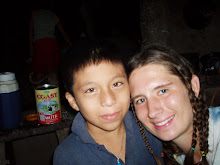
Me and Noemi, one of the little girls who frequently runs around the community sitting in my lap or holding my hand...